
This week, my heart is heavy.
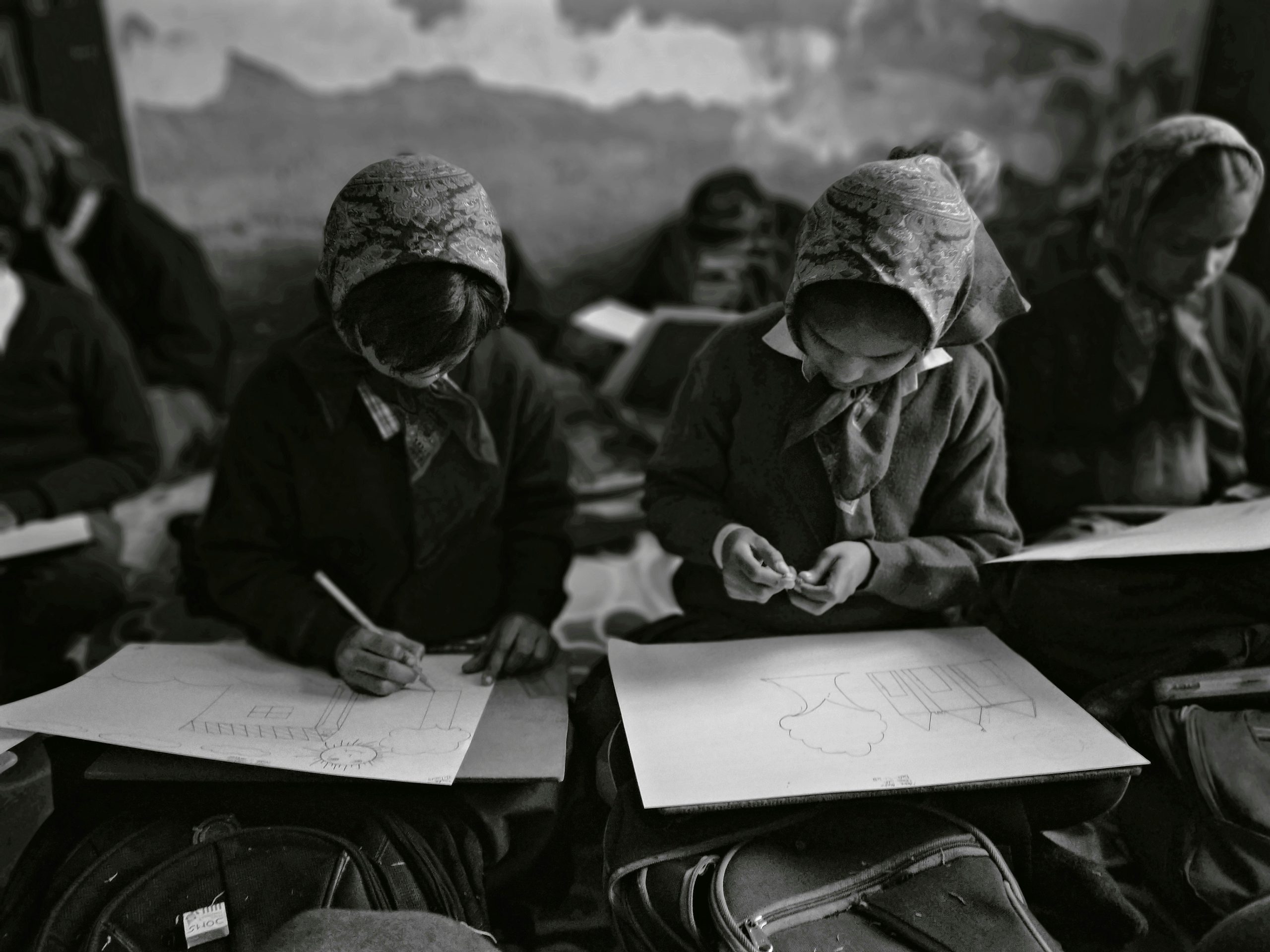
As the conflict in Iran continues to escalate, with strikes, missile exchanges, and the cascading disruption of an entire region; I find myself thinking, as I always do in moments like these, about the children. About the classrooms that are empty or displaced. About the teachers trying to hold routines together when the world outside the window has stopped making sense. About the students who carry the weight of history into a desk that was supposed to be a place of safety and growth.
I have been close to this kind of disruption more than once. Not as a journalist or a policy observer, rather as an educator.
What I Carry From Helsinki
In February 2022, I was living and studying in Helsinki when Russia invaded Ukraine. Finland, which shares an 830-mile border with Russia, felt the tremor of that moment in ways that were immediate and visceral. Conversations changed. Memories of the Finnish-Russian war of 1939 which resulted in the evacuation of the region of Karelia and the loss of their second largest city of Viipuri. The air changed. And in schools — in Finland and across Europe — educators faced an urgent, practical question: how do you teach when your students are terrified, grieving, or themselves displaced?
I watched Finnish educators respond with a combination of emotional honesty and structural steadiness that I have never forgotten. They did not pretend the war wasn’t happening. They also did not let the war consume everything. They held both truths at once — acknowledging the reality of the world and protecting the integrity of the learning environment — because they understood that for children in crisis, school can be one of the most stabilizing forces in existence.
Later, teaching in Washington D.C., I worked with students who had fled Ukraine. Teenagers who had left everything behind, crossed borders with their families, and found themselves sitting in an American classroom trying to conjugate verbs and analyze literature in a second language while their homes were being bombed. The academic challenge was immense. But what they needed first — before any content — was a system that had been built to hold them. A school environment with the structures, routines, and intentional support to signal: you are safe here, and learning is still possible for you.
Some schools had that. Some did not. The difference was not resources alone. It was systems.
A Personal History Closer to Home
My connection to conflict and displacement in education does not begin in Europe.
I grew up in a town so close to the Venezuelan shoreline that we picked up Venezuelan radio stations and television signals. Venezuela was not an abstraction to me, it was a presence, a culture, a place where people had family. My great-grandparents escaped Venezuela during the coup of the 1890s, part of a generation of people who rebuilt their lives after political upheaval made staying impossible.
The recent years in Venezuela, the economic collapse, the political crisis, the mass emigration of millions; have brought all of that personal history back. There are children in Venezuelan classrooms today, and children who have left those classrooms behind, whose educational trajectories have been fundamentally altered by forces entirely outside their control. There are families navigating displacement, uncertainty, and the desperate hope that their children’s futures have not been foreclosed.
And there are educators, in Venezuela, in the countries receiving Venezuelan migrants, in communities across Latin America; trying to do the hardest thing: keep learning alive in circumstances that make learning feel secondary.
It is never secondary.
Urban Classrooms Are Also Conflict Zones
The language of “war” and “crisis” can make it easy to think that educational disruption is something that happens elsewhere — in other countries, in extreme circumstances. But I have spent seven years teaching in Title I schools in Baltimore and Washington D.C., and I know this: uncertainty does not require a military strike to disrupt a child’s capacity to learn.
Students in urban districts navigate forms of chronic instability that, while different in scale from armed conflict, are not different in educational consequence. Housing insecurity. Community violence. Family displacement. The ambient stress of living in environments where safety is not guaranteed. These students also need schools that have been engineered — deliberately, rigorously — to provide the stability that their outside environment cannot.
The research is unambiguous. Chronic stress impairs cognitive function, narrows working memory, and disrupts the very neurological processes that learning depends on. A child who is hypervigilant cannot also be fully present in a classroom. The question for educators and school leaders is not whether this is true, but what they are going to build in response to it.
Inspiration is not the answer. Systems are.
What Schools Can Actually Do
Why We Built Staark
Whether the disruption is a war across the world, a refugee student arriving mid-semester, or the daily instability of an under-resourced urban neighborhood, the educational response is built on the same foundation: systems that are designed to function under pressure.
This means predictable structures and routines that signal safety to students whose worlds are unpredictable. It means staff who have clear protocols — not just good intentions — for identifying and responding to students in distress. It means curriculum that is rigorous enough to maintain its integrity and flexible enough to accommodate the humanity of the students being taught. It means school leadership that understands trauma-informed practice not as a counseling function but as an organizational design principle.
It means, in short, that the school has been built — not just staffed, not just funded, not just inspired — to actually do this work.
Rigorous instruction during uncertainty is not impossible. It happens every day, in schools that have done the architectural work to make it possible. The teachers in those buildings are not exceptional because they are exceptional people — though many of them are. They are effective because the system around them was built to support their effectiveness even when conditions are difficult.
That is an engineering problem. And engineering problems have solutions.
Staark Educational Solutions exists because this gap; between what schools intend to do and what they are built to do; is the central problem of education in our time. It is a gap that appears in peacetime and widens dramatically in crisis. It is a gap that costs children years of their academic development, and in the most vulnerable communities, far more than that.
We work with schools, districts, and education organizations to build the systems that close that gap — the structures, frameworks, and implementation architectures that allow rigorous learning to occur even when the world outside is uncertain. Not because we have a program to sell but rather due to our belief that every child, regardless of what war or instability or neighborhood they were born into, deserves a school that was actually built to serve them.
To the educators right now in Iran, in Israel, in Ukraine, in Venezuela, in Baltimore, in D.C, who are holding their classrooms together under extraordinary pressure: your work is seen. It matters more than most people understand.
And to the school and district leaders who are asking how to build systems that can actually withstand what the world throws at them, that is precisely the conversation we are here to have.
Connect with us at www.staarkeducation.com
Jonathan Staark Frederick is the Founder and Managing Director of Staark Educational Solutions, an education systems engineering firm. He has seven years of teaching experience in Title I schools across Baltimore and Washington D.C., and has lived and worked in education across more than 45 countries.