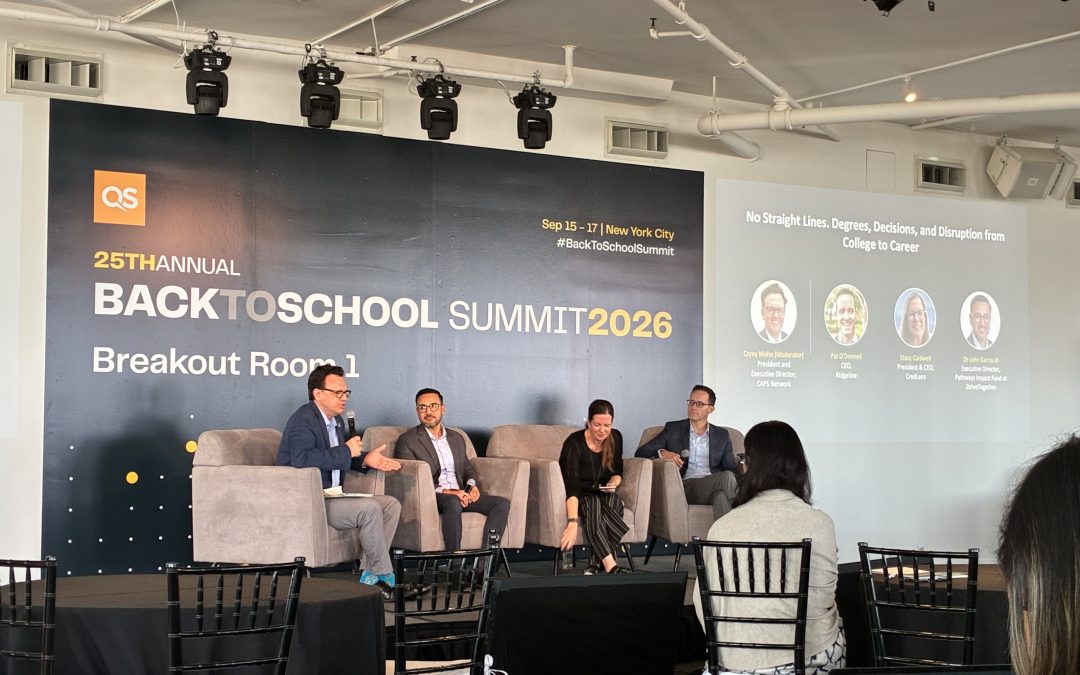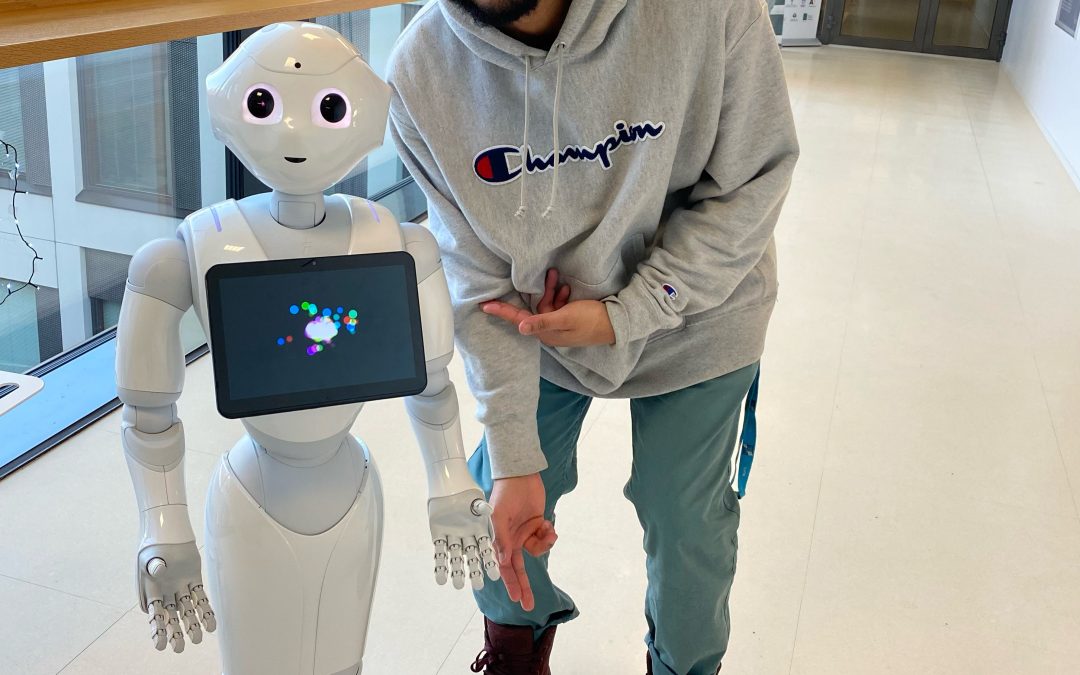

Port of Spain, Trinidad and Tobago.
The question is not simply whether schools should use artificial intelligence. It is whether they can build the judgment, safeguards and daily practices that make it worth using.
By Jonathan Frederick
September 15, 2026
During a recent visit to Trinidad and Tobago, I listened to the education minister discuss the expansion of artificial intelligence in secondary education. The ministry described curriculum-linked digital materials, teacher involvement and plans to monitor an AI-supported learning initiative.
Those are important starting points. They are not yet evidence of better learning.
Listening, I found myself thinking about what would happen after the announcement: the teacher preparing a lesson, the student deciding whether to wrestle with a problem or ask for its solution, the school leader trying to determine whether a new tool was helping either of them.
These are not questions for one country alone. They belong at the center of the American debate about AI in education.
I believe schools should pursue the educational possibilities of AI. But that is different from arguing that every classroom needs a chatbot, every assignment needs an AI component, or every concern can be resolved through a better prompt. A serious strategy must make room for adoption, restriction and rejection, depending on the purpose, the evidence and the students involved.
The work is to build institutions capable of making those distinctions; and acting on them.
A better answer is not necessarily better learning
As a former English teacher, I keep returning to a simple distinction: a stronger piece of writing is not necessarily evidence of a stronger writer.
A student might use AI to test an argument, consider a counterexample or identify a weakness in a draft. The same student might instead use it to avoid developing an argument at all. An evaluation concerned only with the finished submission could miss the difference.
A 2025 study published in the Proceedings of the National Academy of Sciences illustrates the stakes. In a randomized experiment involving nearly 1,000 high-school mathematics students in Turkey, access to a general-purpose-style AI assistant improved performance during practice. But when access was removed, those students performed worse on an unaided assessment than students who had practiced without AI. A version designed to provide learning-oriented guidance largely eliminated that disadvantage, although it did not produce a statistically significant improvement over the control group on the unaided assessment.
That is not a verdict on every AI tool, every subject or students’ long-term cognitive development. It is a warning against confusing successful task completion with successful learning.
There is encouraging evidence, too. A World Bank randomized evaluation in Nigeria found that a six-week, AI-supported after-school program improved students’ performance in English, AI knowledge and digital skills. Crucially, the intervention combined AI access with structured learning activities and teacher support. It evaluated an educational program, not a chatbot operating in isolation.
My reading of these studies is that schools should take both the opportunity and the design problem seriously. Neither study settles what will work in every American classroom. Together, they give us good reason to ask more precise questions about what students are doing, what teachers are supporting and what assessments actually measure.
The relevant unit of evaluation is the learning experience, not merely the software.
Accountability must reach beyond the student
The temptation is to make accountability primarily a question of student misconduct: Who used AI? Was it permitted? What should the consequence be?
Those questions matter. They are not enough.
American education does not begin this discussion without accountability infrastructure. No Child Left Behind and its successor, the Every Student Succeeds Act, established or maintained substantial assessment and accountability requirements. The issue is not that schools have operated without standards or oversight.
The issue is that a requirement to demonstrate results is not the same as the capacity to produce them.
For students, responsible AI use should include clear expectations about permitted assistance, disclosure and the ability to explain their own work. Schools should preserve opportunities to demonstrate understanding without AI, with appropriate accommodations, rather than assuming that an impressive submission reveals how much its author understands.
For teachers, accountability must come with preparation, protected time and usable support. A teacher asked to supervise AI-generated feedback needs more than a login and a general instruction to check for errors. What should be checked? Against which instructional criteria? How should a recurring problem be reported? What work will be removed to make room for this responsibility?
For leaders and vendors, accountability should include evidence appropriate to the proposed use, clear responsibility for problems and a willingness to change course. A district should be able to explain what it is buying, whose problem it addresses and what would persuade it not to renew.
UNESCO’s guidance on generative AI in education emphasizes human agency, data privacy, age-appropriate use and the ethical and educational validation of tools. These principles should become operating decisions: which information may enter a system, who reviews its outputs, how families are informed and what happens when it fails.
An accountability system that scrutinizes students but leaves purchasing decisions and implementation assumptions unexamined is incomplete.
Build the capability, not dependence on the product
There is a useful lesson here from business strategy, though schools should not be mistaken for corporations.
In their 1990 essay, “The Core Competence of the Corporation,” C. K. Prahalad and Gary Hamel argued that organizations should look beyond their current products to the capabilities that make sustained success possible. Those capabilities emerge from collective knowledge and the coordination of different skills and technologies.
Applied to education, the distinction is revealing. A school’s essential capability is not its access to a particular AI platform. It is its ability to help students learn: to recognize misunderstanding, organize effective instruction, exercise judgment and respond when an approach is not working.
An AI investment should strengthen that capability. It should not leave an institution less able to explain its decisions or function without a supplier’s product.
That means teachers need to understand the instructional reasoning behind a workflow. Leaders need enough internal expertise to question vendor claims. The organization should retain the knowledge developed during a pilot rather than allowing it to reside entirely with an outside provider.
Strategy also requires attention to the world outside the institution. The strategic-management literature’s emphasis on environmental scanning, forecasting and scenario planning offers a useful discipline for decisions made under uncertainty.
For a school, that means examining changing technology alongside its own budget, students’ access needs, staff capacity and community expectations. It means asking what happens if a supplier raises prices, changes a feature or withdraws a service. It also means considering whether an apparently successful pilot would work under the ordinary staffing and funding conditions of a full rollout.
A credible AI strategy needs an exit plan as well as a launch plan.
Start with a problem. Earn the right to expand.
Consider a district concerned that ninth-grade students receive too little timely feedback on their writing.
The starting point should not be a target for AI adoption. It should be a defined instructional problem: students need feedback they can understand and use, while teachers need a workload they can sustain.
A bounded pilot might test whether teacher-reviewed AI feedback helps address that problem. Before it begins, the district should establish a baseline, identify a responsible lead, specify what student information may be used and decide how it will assess both educational value and risk.
Evaluation should extend beyond satisfaction surveys and login counts. Are students producing stronger subsequent work without the tool? Can they explain their revisions? Does feedback reach struggling writers as effectively as their peers? Is teacher time genuinely saved after review and correction are included? Where feasible, comparison with similar classes not using the intervention would provide a stronger basis for judgment than a before-and-after celebration alone.
The budget should include the full work of implementation: professional learning, technical support, accessibility, oversight and evaluation. Those are not incidental costs to be discovered after the purchase. They are part of what the institution is choosing to undertake.
Leaders should also decide, in advance, what would justify expansion, what would require redesign and what would trigger a pause. They should compare the proposed investment with credible alternatives, including approaches that do not involve AI.
Implementation is not a technique for making every product succeed. Done properly, it is also how an institution learns that a product should not be used.
This is the work I am building Staark Educational Solutions to support: helping schools, districts and education-focused nonprofits translate their ambitions into defined responsibilities, workable routines and evidence they can use to make decisions. The commitment is not to defend a technology. It is to help institutions determine whether an approach deserves to become part of their practice.
I returned from Trinidad and Tobago with a question that applies equally to an American school district: What will remain after the excitement of the launch?
The answer should be more than a contract, a platform and a set of usage statistics. It should be teachers with stronger support, leaders with clearer evidence and students who can do more than they could before.
The promise of artificial intelligence in education should ultimately be judged by the human capability it leaves behind.